TYPED PYTHON AGENTS / VALIDATED OUTPUTS / TESTABLE TOOLS
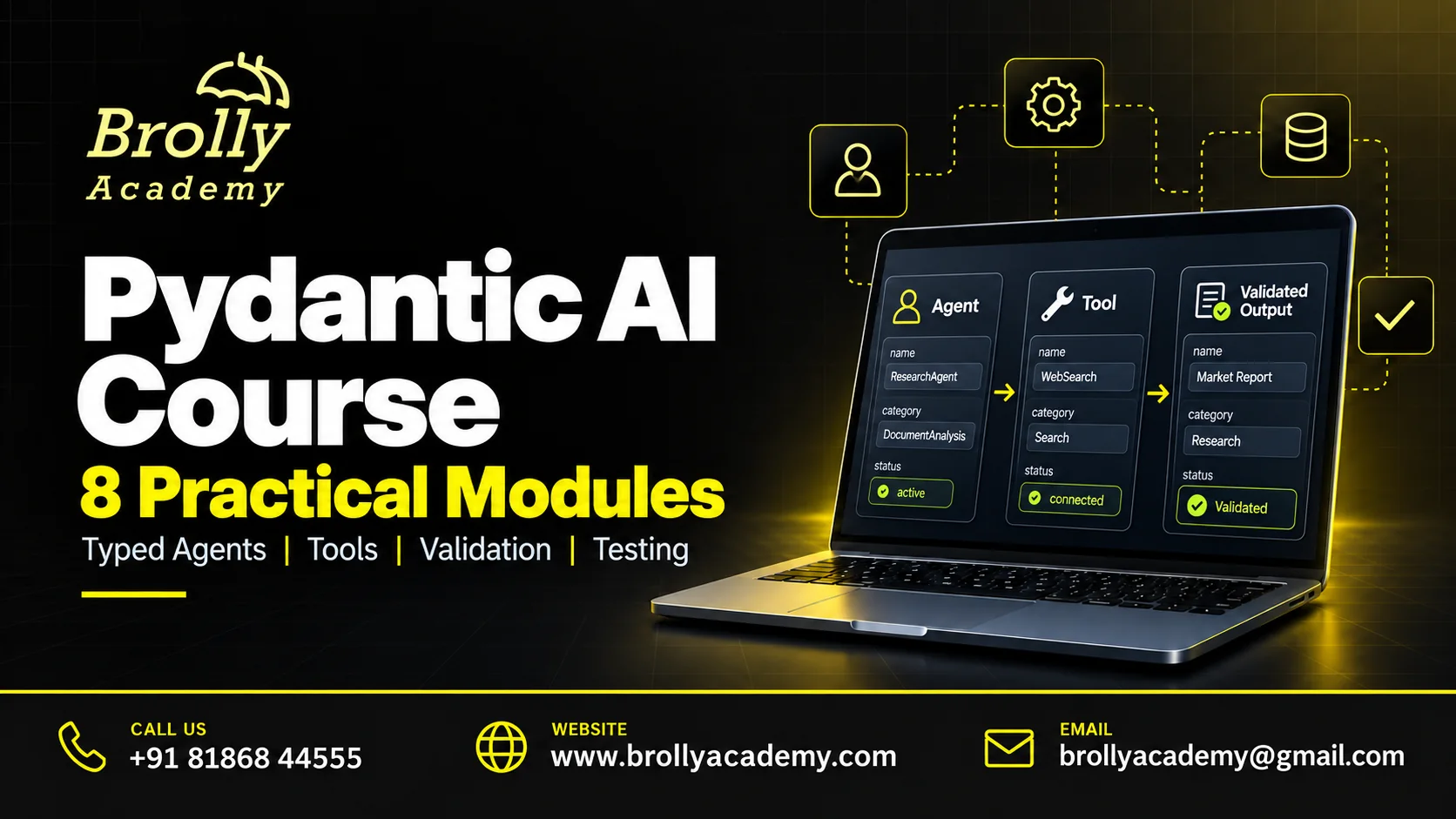
Pydantic AI Course
Build a Python agent with explicit inputs, validated outputs and tools you can test. This Pydantic AI Course focuses on typed application design, dependency management and controlled execution, helping you distinguish a well-formed response from a trustworthy one.
★ 4+ Google rating from 100+ reviews · 9,000+ students trained · 523+ batches completed · Teaching since 2021
Next batch: Monday, 2 November 2026
Course outline8 modules
Practice3 project scenarios
Duration2 months
Course feeOnline ₹20,000
Classroom ₹25,000
About the Pydantic AI Course
Pydantic AI is a Python framework for building model-backed agents with a strong emphasis on type-oriented development. Types and validation make application contracts clearer, but they do not prove that a model answer is true. You combine structured outputs with business checks, source evidence and repeatable tests.
This is a specialist Python engineering course, not a broad Generative AI overview. Unlike a no-code workflow course, it expects you to work with Python types and application services. LangChain offers another integration approach; this outline gives particular attention to Pydantic models, typed dependencies, validation and testable agent behaviour.
For product-specific terminology and behaviour, use Pydantic AI documentation. Match the documentation to the environment used in your exercises.
Benefits of Learning Pydantic AI
Turn the syllabus into practical advantages you can demonstrate in your own work. These outcomes come from building, checking and explaining the exercises.
Make output contracts explicitDefine the structure an application expects and check generated results against it.
Keep dependencies testableSeparate external services from agent logic so tests can use controlled substitutes.
Understand validation limitsDistinguish a well-formed value from one that is factually correct or authorised.
Control recovery behaviourLimit repeated attempts and make unresolved validation failures visible.
Protect tool executionValidate arguments and enforce permissions in application code.
Deliver maintainable AI featuresProvide typed interfaces, tests and clear error handling for another developer to review.
Who Should Join?
Python functions, classes, type hints, exceptions and API basics are expected. Familiarity with Pydantic validation is useful but introduced in the first modules. Async programming knowledge helps with more advanced execution exercises.
Typed Python developersAdd model-backed agents to a codebase with clear contracts.
Backend engineersInject services and enforce validation around model decisions.
AI application testersUse controlled dependencies and test doubles to inspect behaviour.
For complementary learning, explore Generative AI Training. Choose the broader program if you need an introduction to AI models, prompting and the wider application landscape before specialising.
Pydantic AI Prerequisites and Readiness Checklist
Use these three checks to decide whether you are ready to start or need a short foundation step first. Bring any gaps to your demo discussion.
Typed PythonRead type annotations, functions and basic classes. Understand optional values and exceptions.
Validation conceptsDefine a small structured record and test a missing field or an invalid value.
Model-backed developmentPrepare a permitted model endpoint and synthetic tool data, with credentials kept outside the repository.
Pydantic AI Course Syllabus: 8 Practical Modules
Each module connects a concept to an exercise and an output you can explain. Work through the foundations before attempting the integrated project.
1. Python types and validation foundations
Define a small Pydantic model with required fields and constrained values. Validate normal and malformed inputs. Explain the difference between type checking, runtime validation and a domain rule that requires external evidence.
2. Agent setup and model configuration
Create a minimal agent with a supported model integration. Keep configuration and credentials outside source code. Record the installed versions and inspect a complete result before adding tools or application state.
3. Typed outputs and semantic checks
Describe the output your application needs and validate generated fields. Add business checks such as allowed categories or supported source IDs. Test cases where the output is structurally valid but makes an unsupported claim.
4. Dependencies and application services
Supply the agent with the services and context it needs through explicit dependencies. Separate a real service from its test double. Prevent one user request from receiving another user's private context or access scope.
5. Tools and bounded actions
Define tools with clear arguments and useful errors. Validate permissions at execution time. Use a mock write operation behind an approval step, and demonstrate that a suggested action is not the same as an authorised action.
6. Async execution and failure handling
Use supported asynchronous patterns where appropriate. Handle timeouts, invalid tool results and provider errors. Limit retries and usage, and preserve an understandable error response when the agent cannot complete the task.
7. Testing and evaluation
Test deterministic components with controlled models or services. Evaluate model-dependent behaviour separately with representative cases. Include invalid outputs, unavailable dependencies and denied permissions in the regression set.
8. Typed agent capstone
Package an agent-backed service with configuration, schemas and tests. Deliver a small API or interface, a failure matrix and a project README. Explain which guarantees come from validation and which still depend on evidence and human judgement.
Discuss Your Learning Goals
Tell the team about your experience and preferred schedule. Book a free demo to discuss the course, lab access and the practical work expected from you.
Practical Skills You Will Develop
Use the exercises to build an explanation as well as a result. You should be able to show what you did, how you checked it and where the limits are.
Typed contractsDefine explicit application inputs and outputs.
Dependency designKeep service access and request context testable and isolated.
Tool validationEnforce argument and permission checks outside model discretion.
Semantic verificationCheck meaningful constraints beyond valid data structure.
Failure-aware executionBound retries and return useful failure states.
Test separationDistinguish software contract tests from model-quality evaluation.
Tools and Lab Requirements
Use a personal practice environment with synthetic or openly licensed data. Keep credentials outside notebooks and source control. Confirm software access, hardware and any paid API usage with the course team before enrolling.
Python and PydanticA supported environment with type hints and runtime validation.
Pydantic AI integrationUse packages and model interfaces matching the installed release.
Test doubles and model accessMock services for repeatable tests and a permitted endpoint for evaluation.
Consult Pydantic validation documentation during practice. Use documentation matching the installed version and check applicable permissions and service costs.
Your Learning Roadmap
Build confidence in stages. Practice time and your starting knowledge matter as much as the number of scheduled sessions.
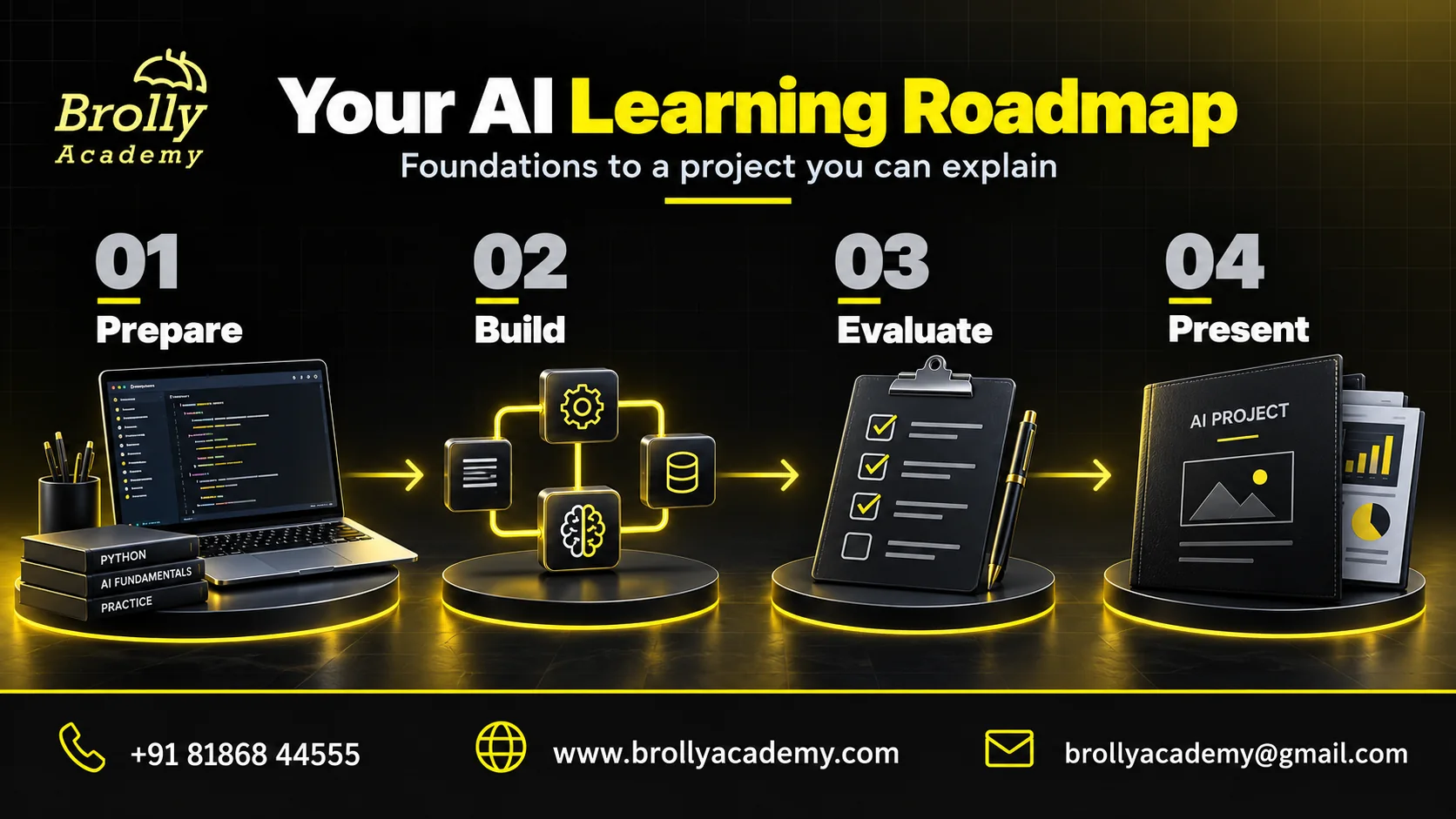
1. Set up and understandCheck the prerequisites and lab access. Complete the first two modules and explain the basic workflow in your own words.
2. Build and investigateWork through the middle modules. Keep notes of errors, what you tried and the evidence that supported a fix.
3. Test and presentComplete the final modules and an integrated scenario. Present your output, validation and a short handover guide.
Your Pydantic AI project milestone: Include the output models, dependency test doubles, invalid-output tests and a documented tool-permission boundary. Use the existing syllabus checklist to track progress; follow the stages during the 2-month course and confirm assignment dates with your trainer.
3 Practical Project Scenarios
These are teaching scenarios using approved lab systems and synthetic data. They are not claims about live client work or previous student results.
Typed request classifierReturn a validated category, priority and explanation for synthetic requests. Reject unsupported values and inspect ambiguous cases.
Permission-aware catalogue agentInject a read-only service with a user-specific access scope. Confirm that denied items cannot be returned through a tool or fabricated source reference.
Approval-based update assistantGenerate a structured proposed update and require a separate approval before the mock action executes. Test denied approval and a failed dependency.
How the Skills Work in Practice
An agent returns valid JSON containing a product ID that does not exist. The schema check passes because the ID is a string, but the application still needs a catalogue lookup to confirm it. Add that check rather than making the output schema increasingly complicated.
Now test an existing product that the current user may not access. The lookup must enforce permission, not merely confirm existence. Your project report should distinguish structural validation, factual verification and authorisation as three separate responsibilities.
Why Learn with Brolly Academy?
Choose a course that connects the subject to work you can actually demonstrate. Use a demo to discuss the learning path and decide whether it fits your starting point.
A connected learning pathThe eight-module outline moves from foundations to an integrated task. Each module identifies an output rather than leaving practice as a vague promise.
Discuss your own learning goalShare your experience and preferred format with the course team. Use a demo to assess whether the technical depth, pace and project expectations fit your needs.
Clear course boundariesThe page explains prerequisites, product scope and the difference between training completion and independent certification. You can compare the offer with your actual requirements.
Compare Brolly Academy with Other Training Institutes
Compare the same evidence from each provider: what you will build, what you will test and which services the fee includes. Ask for specific examples rather than relying on broad claims about advanced AI.
What to discuss with Brolly AcademyReview these eight modules and the three project scenarios.
Ask for the assigned trainer profile.
Check the lab version and access period.
Review the fee, schedule and certificate terms.
Use the demo to assess the teaching approach.
What to check with any instituteRequest a detailed outline, not just product names.
Verify the trainer information supplied.
Separate demonstrations from your own lab work.
Check licences, exam costs and refund conditions.
Compare the total commitment, not only the advertised price.
Classroom, Online and Corporate Learning
Discuss the currently available delivery format with the academy before booking. Batch availability and session timings should be agreed in writing.
Classroom learning enquiryConfirm the venue, next available batch and computer requirements before arranging travel.
Live online enquiryCheck the session time zone, remote lab access and arrangements for asking questions or catching up on a missed session.
Corporate team enquiryShare your team size, current tools and learning objectives. Agree a scoped program without sharing confidential business data.
For a team program, explore Brolly Academy corporate training.
Pydantic AI Course Fee and Duration
The Pydantic AI Course runs for 2 months. The fee is ₹20,000 for online training or ₹25,000 for classroom (offline) training. Ask for a written quotation confirming taxes, payment and refund terms, lab access and any separate software or API charges.
Classroom training: ₹25,000Learn in the classroom over 2 months. Confirm the venue, batch start date and session timings with the academy before arranging travel.
Online training: ₹20,000Choose online learning over 2 months. Confirm the session time zone, lab access and arrangements for questions or missed sessions before enrolling.
Duration: 2 monthsPlan time for lessons, independent practice and the course project. Ask for the batch calendar, instructor-led hours, assignment deadlines and support period.
Course Completion and Certification Guidance
Brolly Academy course completion recognizes the training and assessment work agreed for your batch. It is separate from a credential awarded by a software vendor or another certification body.
Brolly Academy course completionAsk for the attendance, assignment and assessment requirements, the certificate wording and how completion will be verified.
Independent certificationUse official vendor information to check whether a relevant credential is currently offered and what preparation it requires. No vendor authorization, exam voucher or pass guarantee is implied.
Career Roles and Skill Applications
Match the learning path to a role, then compare its requirements with your existing experience. The course can support skill development; it does not guarantee employment.
Python AI application developerBuild typed, model-backed services.
Backend engineer with agent skillsIntegrate agents with validated business interfaces.
AI software quality engineerTest contracts, dependencies and model-dependent behaviour.
You can also explore AI Testing Training. Develop a deeper QA practice for AI answers, tool behaviour and release decisions.
Where These Skills Are Used
Typed agents can support structured request processing, controlled lookup and application assistance. They are most useful when the surrounding software has clear contracts. Runtime validation is valuable engineering support, not a guarantee of truth, security or production readiness.
Interview and Portfolio Preparation
Prepare evidence you can discuss clearly. Label practice work as training work and do not present a teaching scenario as paid client experience.
Explain a projectDescribe the requirement, your decisions, the result and one limitation. Be ready to answer what you would change for a real deployment.
Show useful evidenceKeep approved files, test results and a concise README or runbook. Remove secrets and private information before sharing a portfolio.
Discuss support servicesAsk the academy which resume, mock-interview or job-search services are included in your batch. Placement assistance is not a job or salary guarantee.
Placement Preparation and Career Support
Use this checklist during your demo to agree the career-support services included with your batch. The preparation below builds on your course project; recruitment and interview outcomes remain with the employer.
Choose a target roleStart with the responsibilities of a Python AI application developer. Compare several relevant job descriptions and note the skills you can already prove.
Prepare a project evidence packInclude the output models, dependency test doubles, invalid-output tests and a documented tool-permission boundary.
Practise a technical discussionWhy can an output pass schema validation and still be unsafe to use in a business action? Explain your decision with a test or project example.
Write an honest resume entryState the project goal, your contribution and the checks you ran. Label it as a learning project and report only results you actually measured.
Request focused feedbackAsk whether the batch includes a resume review, portfolio review or mock interview. Agree the format, number of reviews and support period before enrolling.
Plan applications and follow-upKeep a record of role requirements, applications and feedback. Use the next practice session to address a specific gap rather than adding unsupported claims to your profile.
Career Planning and Salary Expectations
Salary depends on the role, prior experience, location and the employer. A tool course alone does not establish a salary band. Compare recent job descriptions, required experience and responsibilities rather than relying on a headline income promise.
Meet Your Trainer: Dinesh
Dinesh is the trainer for the Pydantic AI Course. Use a demo to discuss your learning goals, ask about a practical Pydantic AI scenario and understand how project feedback is provided.
Relevant experienceAsk for examples of work with Pydantic AI that can be discussed without revealing confidential client information.
Practical explanationAsk the trainer to explain a failure scenario and how a learner would investigate it, rather than only showing a finished result.
Feedback and supportDiscuss how assignments are reviewed, how questions are handled and the support period included in the course.
Brolly Academy Learner Feedback
Read available academy feedback and ask whether a review relates to this particular course, trainer and delivery format. General academy reviews should not be mistaken for verified results from this new course.
The excerpts below are published on Brolly Academy's academy reviews page. They describe Data Science and Machine Learning courses, not this new Pydantic AI course.
Aditya - Data Science"The instructors provided a clear and practical understanding of data science concepts."
Read the original academy testimonial
Kavita Singh - Data Science"The hands-on projects helped me apply the concepts effectively."
Read the original academy testimonial
Rahul Desai - Machine Learning"The trainers were experienced professionals who explained complex algorithms with ease."
Read the original academy testimonial
Student Community and Continued Learning
Keep learning visible: ask precise questions, share permitted examples and record what changed after feedback. Check with the course team about any batch-specific discussion group or mentor access.
Academy updatesFollow the Brolly Academy WhatsApp channel for public academy updates. A public channel is separate from individual technical support.
Pydantic AI peer-practice ideaExchange malformed structured outputs and compare validation errors, recovery limits and the final application response.
Share safely and ask clearlyInclude the tool version, a small permitted example, the expected result and what happened. Remove API keys, employer documents and personal data before asking for help.
For continued technical learning, use Pydantic AI documentation. Recheck examples against the version you are using.
Download Your Practice Checklists
Use these editable CSV files to organize your learning. They open in common spreadsheet tools and contain real module and project-checklist content.
Download Syllabus (CSV) Project Checklist (CSV)Official Documentation for Further Reading
Use the documentation that matches your product version and environment. These sources support technical learning; linking to them does not imply endorsement of Brolly Academy.
Pydantic AI documentation
Pydantic validation documentation
Pydantic AI project
Related Courses at Brolly Academy
Choose complementary learning based on your current skill gaps. These are separate courses, not automatically included in this program.
Generative AI TrainingChoose the broader program if you need an introduction to AI models, prompting and the wider application landscape before specialising.
View Generative AI Training
Agentic AI CourseExplore agent architecture and decision-making across a broader range of tools.
View Agentic AI Course
AI Testing TrainingDevelop a deeper QA practice for AI answers, tool behaviour and release decisions.
View AI Testing Training
To compare typed-agent development with broader model-and-tool application composition, explore the LangChain Course.
When the learning goal is explicit workflow state, branching and human approval, see the LangGraph Course.
To study collaborating agents organised around roles and tasks, compare the CrewAI Course.
Talk to the Pydantic AI Course Team
Call +91 81868 44555 or send a course enquiry to discuss the syllabus and current batch options. For a classroom visit, confirm the venue and appointment with Brolly Academy before travelling.
Read our contact details for the academy location and enquiry options. Online delivery, session time zones and tool access should be confirmed for your batch.
Call +91 81868 44555Pydantic AI Course FAQs
Is Pydantic AI the same as Pydantic?
No. Pydantic provides data validation and related tooling. Pydantic AI is an agent framework that uses type-oriented patterns in model-backed applications.
Do I need Python type hints?
Yes, they are central to this course. You should be comfortable with functions and classes and willing to describe data structures explicitly. The opening module reviews the validation concepts used later.
Does validated output mean the answer is correct?
No. A response can match a schema and still contain an invented fact or unauthorised value. Business rules, source checks and access control remain separate requirements.
How is this different from LangChain?
Both can support model-backed applications. This course concentrates on typed outputs, dependencies and testable Python service integration using Pydantic AI rather than LangChain abstractions.
Can I test without making paid model calls every time?
Many software behaviours can be tested with controlled services or test doubles. You still need separate model-dependent evaluations to assess real model behaviour. The course keeps those two test layers distinct.
Will the capstone be production-ready automatically?
No classroom project can guarantee that. It provides schemas, tests and operational notes. A real deployment still needs security review, load testing, monitoring and environment-specific approval.
How much does the Pydantic AI Course cost?
The Pydantic AI Course fee is ₹20,000 for online training and ₹25,000 for classroom (offline) training. Confirm taxes, payment and refund terms, lab access and any separate software, API or examination costs in your written quotation.
What is the course duration and batch schedule?
The course duration is 2 months for both online and classroom training. Contact Brolly Academy for the next batch start date, session timings, instructor-led hours and independent practice expectations.
Can I attend a free demo before enrolling?
Use Book Free Demo to open the enquiry form, or contact the team on WhatsApp. Share your experience and learning goal so the counsellor can discuss a suitable session and current availability.
What certificate will I receive?
Discuss the Brolly Academy course-completion requirements for your batch, including attendance, assignments and project assessment. Course completion is separate from any credential issued by a software vendor or independent examination body.
Does the course guarantee a job or salary?
No. The learning path is designed to build demonstrable skills. Ask which portfolio, resume or interview-support services are included. Hiring decisions depend on your wider experience, preparation, location and employer requirements.
How should I compare this course with another institute?
Compare the actual syllabus, your own lab work, trainer experience, project feedback, tool costs and written terms. Ask each provider the same questions and use a demo to assess the teaching style before committing.
Got More Questions About Pydantic AI?
Talk to the Brolly Academy team about your starting skills, learning goal and available batch options. Request a free demo before choosing your course.