STATEFUL WORKFLOWS / CHECKPOINTS / HUMAN APPROVAL
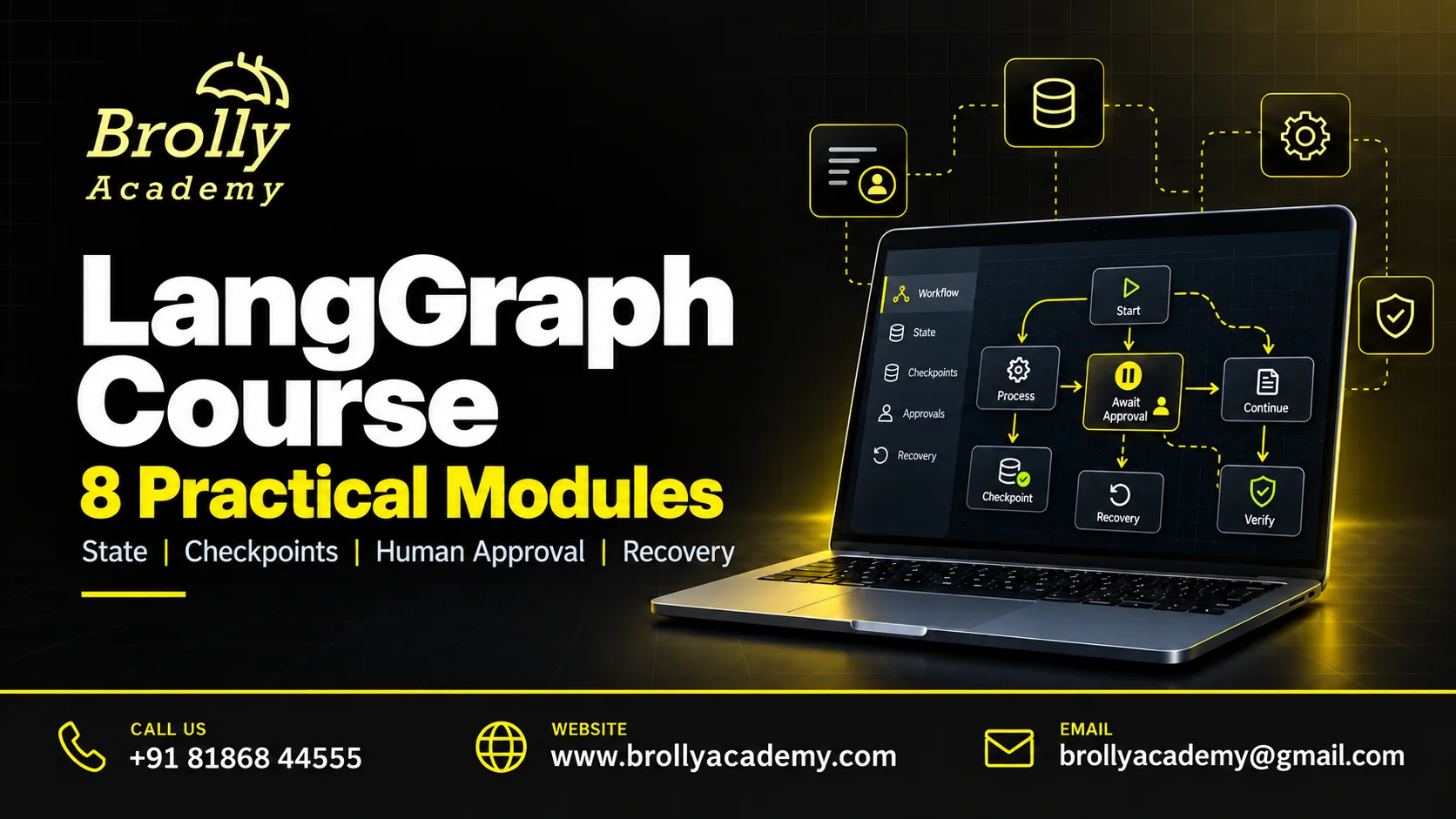
LangGraph Course
Build an AI workflow that knows its current state, pauses for a decision and resumes after a failure. This LangGraph Course focuses on controlled orchestration, combining ordinary program steps with model-driven decisions in a workflow you can inspect.
★ 4+ Google rating from 100+ reviews · 9,000+ students trained · 523+ batches completed · Teaching since 2021
Next batch: Monday, 2 November 2026
Course outline8 modules
Practice3 project scenarios
Duration2 months
Course feeOnline ₹20,000
Classroom ₹25,000
About the LangGraph Course
LangGraph provides a low-level runtime for stateful agent orchestration. Nodes perform work, edges control movement and shared state carries information between steps. The goal is to understand the lifecycle of a workflow, not simply connect more agents. You practise what happens when a tool fails, approval is declined or a process resumes after interruption.
The broad Generative AI course introduces agents; this course specialises in workflow control and durability. It is different from LangChain application integration and CrewAI role-based collaboration. Detailed RAG indexing, model training and general cloud administration are not the core syllabus.
For product-specific terminology and behaviour, use LangGraph overview. Match the documentation to the environment used in your exercises.
Benefits of Learning LangGraph
Turn the syllabus into practical advantages you can demonstrate in your own work. These outcomes come from building, checking and explaining the exercises.
Make execution explicitShow how state moves between nodes and why the next step runs.
Design controlled recoveryPlan retries and resume points rather than restarting every failed workflow from the beginning.
Keep approval separatePause for a human decision before a consequential action is executed.
Understand persistenceExplain what is stored, when it is restored and which data should not be retained.
Test more than the happy pathExercise rejected approvals, interrupted execution and repeated events.
Present a clear architectureUse a graph diagram and execution evidence to explain the workflow to another developer.
Who Should Join?
Python functions, type hints, exceptions and basic model API usage are expected. Familiarity with async code and persistence is useful. Complete a simple model-backed application before attempting checkpointing and recovery exercises.
Python AI developersMove beyond a single model call into multi-step controlled workflows.
Backend engineersDesign recoverable application state and side-effect boundaries.
Agent developersAdd approval, observability and bounded execution to an agent prototype.
For complementary learning, explore Generative AI Training. Choose the broader program if you need an introduction to AI models, prompting and the wider application landscape before specialising.
LangGraph Prerequisites and Readiness Checklist
Use these three checks to decide whether you are ready to start or need a short foundation step first. Bring any gaps to your demo discussion.
Python state handlingWrite functions that read and update a dictionary. Understand what should be returned rather than changed unexpectedly.
Workflow thinkingSketch a process with a success path, a retry, a stop condition and an approval step before turning it into a graph.
A permitted test environmentUse synthetic state and mock actions. Check the installed LangGraph version and the persistence approach selected for the lab.
LangGraph Course Syllabus: 8 Practical Modules
Each module connects a concept to an exercise and an output you can explain. Work through the foundations before attempting the integrated project.
1. Workflow modelling and boundaries
Describe a business task as explicit states and transitions. Identify which steps need a model and which should remain deterministic. Produce a state diagram with success, rejection, timeout and escalation paths before writing the graph.
2. State, nodes and edges
Define a typed state structure and build small nodes with clear contracts. Add edges and conditional routing. Inspect how state changes after each node and ensure parallel updates use a deliberate merge strategy rather than silently overwriting information.
3. Model and tool nodes
Integrate a model decision with validated tool inputs. Keep business rules outside the prompt where code can enforce them. Restrict available tools and test what happens when the model asks for an unsupported action or provides incomplete arguments.
4. Checkpoints and conversation threads
Persist workflow progress with a checkpointer suitable for the lab. Use separate thread identifiers and understand what a saved checkpoint contains. Demonstrate resuming one workflow without mixing its state with another user session.
5. Human approval and interrupts
Pause before a consequential action and present the proposed change for review. Implement approve, reject and revise paths. Record the decision in state and show that a rejected action does not execute when the workflow continues.
6. Recovery and bounded execution
Handle failed tools, timeouts and repeated routing. Set practical execution limits and design idempotent side effects so a retry does not duplicate an action. Test recovery from a checkpoint using a mock service with a deliberate failure.
7. Subgraphs, streaming and inspection
Break a larger workflow into understandable components. Stream progress messages without leaking private state. Inspect execution traces and compare the expected route with the observed route for normal, rejected and failed requests.
8. Deployment-ready capstone
Package the graph with configuration, tests and state-storage notes. Define cleanup, access and retention responsibilities. Present an approval-based workflow with evidence of isolation, recovery and termination; explain remaining production work honestly.
Discuss Your Learning Goals
Tell the team about your experience and preferred schedule. Book a free demo to discuss the course, lab access and the practical work expected from you.
Practical Skills You Will Develop
Use the exercises to build an explanation as well as a result. You should be able to show what you did, how you checked it and where the limits are.
State designDefine what a workflow knows and how its state changes.
Conditional routingMake success, rejection and escalation paths explicit.
Safe resumptionResume saved work without confusing sessions or duplicating side effects.
Human oversightPlace review before consequential actions and preserve the decision.
Recovery testingExercise failures and bounded retries rather than only the happy path.
Trace-based debuggingExplain the path a workflow took and why it took it.
Tools and Lab Requirements
Use a personal practice environment with synthetic or openly licensed data. Keep credentials outside notebooks and source control. Confirm software access, hardware and any paid API usage with the course team before enrolling.
Python and LangGraphUse a pinned environment and the matching reference documentation.
State persistenceBegin with a lab checkpointer and discuss durable storage requirements separately.
Mock tools and tracesUse synthetic requests and sandboxed actions with inspectable execution evidence.
Consult LangGraph persistence during practice. Use documentation matching the installed version and check applicable permissions and service costs.
Your Learning Roadmap
Build confidence in stages. Practice time and your starting knowledge matter as much as the number of scheduled sessions.
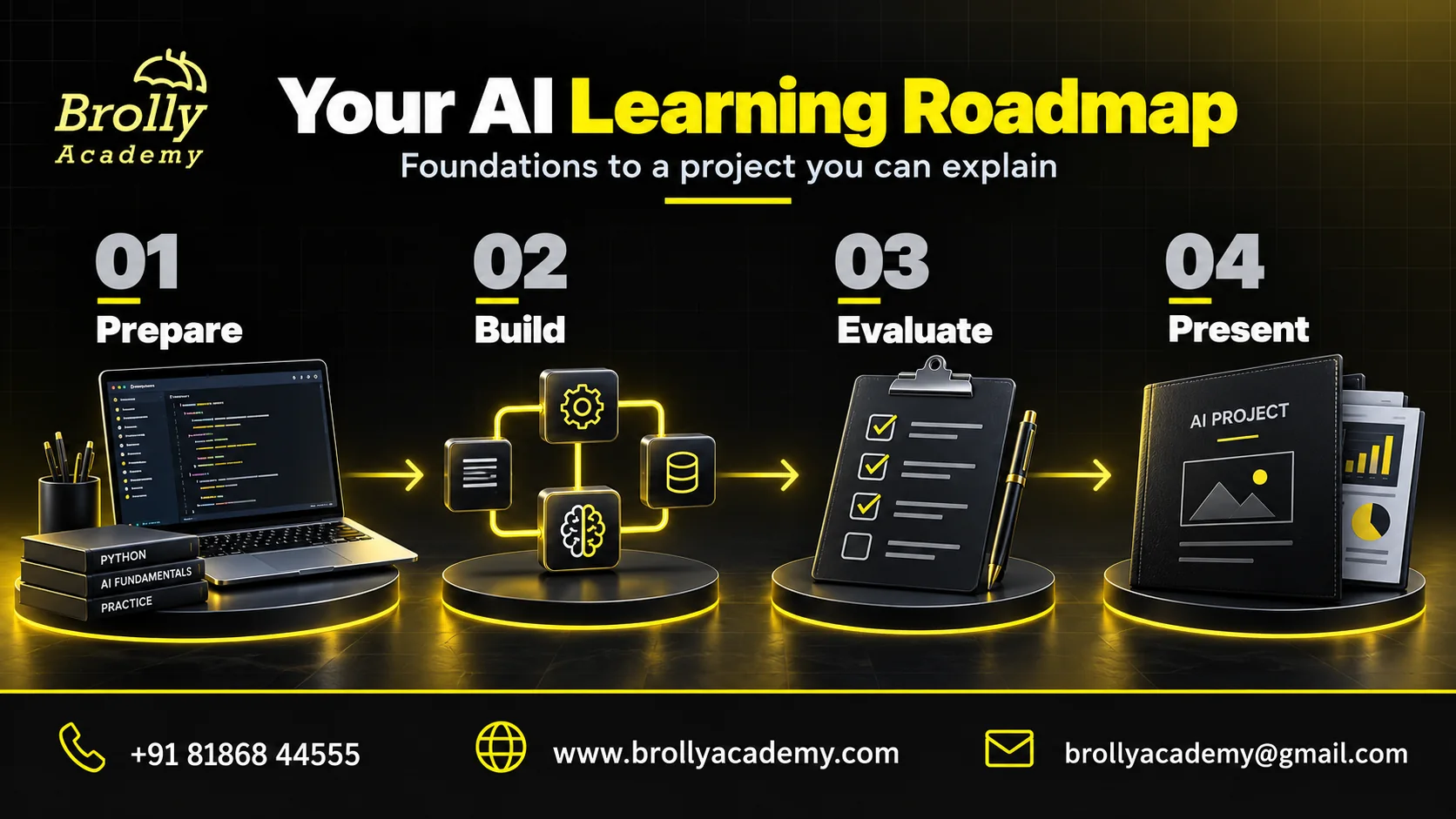
1. Set up and understandCheck the prerequisites and lab access. Complete the first two modules and explain the basic workflow in your own words.
2. Build and investigateWork through the middle modules. Keep notes of errors, what you tried and the evidence that supported a fix.
3. Test and presentComplete the final modules and an integrated scenario. Present your output, validation and a short handover guide.
Your LangGraph project milestone: Include a state definition, graph diagram, interrupted-run example, resume test and protection against duplicate actions. Use the existing syllabus checklist to track progress; follow the stages during the 2-month course and confirm assignment dates with your trainer.
3 Practical Project Scenarios
These are teaching scenarios using approved lab systems and synthetic data. They are not claims about live client work or previous student results.
Approval-based service requestRoute a fictional request through validation, drafting and human approval. Reject incomplete requests and block execution when approval is denied.
Recoverable research workflowSave progress across collection, summarisation and review. Resume after a simulated source failure without repeating completed side effects.
Support escalation graphClassify a synthetic ticket, attempt a permitted lookup and route low-confidence or failed cases to a human queue with a clear reason.
How the Skills Work in Practice
A workflow prepares an account-change request in a sandbox. A deterministic node validates the requested fields, a model drafts an explanation and an interrupt waits for approval. Only a later node can call the mock update tool.
Now simulate a timeout after the mock service receives the request. The recovery exercise must prevent a duplicate update. Use a stable action identifier and an idempotent tool contract, then explain why checkpointing alone does not make every external action safe to repeat.
Why Learn with Brolly Academy?
Choose a course that connects the subject to work you can actually demonstrate. Use a demo to discuss the learning path and decide whether it fits your starting point.
A connected learning pathThe eight-module outline moves from foundations to an integrated task. Each module identifies an output rather than leaving practice as a vague promise.
Discuss your own learning goalShare your experience and preferred format with the course team. Use a demo to assess whether the technical depth, pace and project expectations fit your needs.
Clear course boundariesThe page explains prerequisites, product scope and the difference between training completion and independent certification. You can compare the offer with your actual requirements.
Compare Brolly Academy with Other Training Institutes
Compare the same evidence from each provider: what you will build, what you will test and which services the fee includes. Ask for specific examples rather than relying on broad claims about advanced AI.
What to discuss with Brolly AcademyReview these eight modules and the three project scenarios.
Ask for the assigned trainer profile.
Check the lab version and access period.
Review the fee, schedule and certificate terms.
Use the demo to assess the teaching approach.
What to check with any instituteRequest a detailed outline, not just product names.
Verify the trainer information supplied.
Separate demonstrations from your own lab work.
Check licences, exam costs and refund conditions.
Compare the total commitment, not only the advertised price.
Classroom, Online and Corporate Learning
Discuss the currently available delivery format with the academy before booking. Batch availability and session timings should be agreed in writing.
Classroom learning enquiryConfirm the venue, next available batch and computer requirements before arranging travel.
Live online enquiryCheck the session time zone, remote lab access and arrangements for asking questions or catching up on a missed session.
Corporate team enquiryShare your team size, current tools and learning objectives. Agree a scoped program without sharing confidential business data.
For a team program, explore Brolly Academy corporate training.
LangGraph Course Fee and Duration
The LangGraph Course runs for 2 months. The fee is ₹20,000 for online training or ₹25,000 for classroom (offline) training. Ask for a written quotation confirming taxes, payment and refund terms, lab access and any separate software or API charges.
Classroom training: ₹25,000Learn in the classroom over 2 months. Confirm the venue, batch start date and session timings with the academy before arranging travel.
Online training: ₹20,000Choose online learning over 2 months. Confirm the session time zone, lab access and arrangements for questions or missed sessions before enrolling.
Duration: 2 monthsPlan time for lessons, independent practice and the course project. Ask for the batch calendar, instructor-led hours, assignment deadlines and support period.
Course Completion and Certification Guidance
Brolly Academy course completion recognizes the training and assessment work agreed for your batch. It is separate from a credential awarded by a software vendor or another certification body.
Brolly Academy course completionAsk for the attendance, assignment and assessment requirements, the certificate wording and how completion will be verified.
Independent certificationUse official vendor information to check whether a relevant credential is currently offered and what preparation it requires. No vendor authorization, exam voucher or pass guarantee is implied.
Career Roles and Skill Applications
Match the learning path to a role, then compare its requirements with your existing experience. The course can support skill development; it does not guarantee employment.
Agent workflow developerImplement inspectable, stateful AI workflows.
AI platform engineerManage workflow execution, persistence and recovery boundaries.
Backend automation engineerCombine deterministic business logic with controlled model decisions.
You can also explore AI Testing Training. Develop a deeper QA practice for AI answers, tool behaviour and release decisions.
Where These Skills Are Used
Stateful orchestration is useful when a task spans several steps, depends on review or must survive an interruption. It adds complexity, so a short deterministic script may still be the better choice for a simple fixed task. Architecture decisions are part of the learning outcome.
Interview and Portfolio Preparation
Prepare evidence you can discuss clearly. Label practice work as training work and do not present a teaching scenario as paid client experience.
Explain a projectDescribe the requirement, your decisions, the result and one limitation. Be ready to answer what you would change for a real deployment.
Show useful evidenceKeep approved files, test results and a concise README or runbook. Remove secrets and private information before sharing a portfolio.
Discuss support servicesAsk the academy which resume, mock-interview or job-search services are included in your batch. Placement assistance is not a job or salary guarantee.
Placement Preparation and Career Support
Use this checklist during your demo to agree the career-support services included with your batch. The preparation below builds on your course project; recruitment and interview outcomes remain with the employer.
Choose a target roleStart with the responsibilities of a Agent workflow developer. Compare several relevant job descriptions and note the skills you can already prove.
Prepare a project evidence packInclude a state definition, graph diagram, interrupted-run example, resume test and protection against duplicate actions.
Practise a technical discussionWhat happens if a workflow resumes after a tool has already completed a write action? Explain your decision with a test or project example.
Write an honest resume entryState the project goal, your contribution and the checks you ran. Label it as a learning project and report only results you actually measured.
Request focused feedbackAsk whether the batch includes a resume review, portfolio review or mock interview. Agree the format, number of reviews and support period before enrolling.
Plan applications and follow-upKeep a record of role requirements, applications and feedback. Use the next practice session to address a specific gap rather than adding unsupported claims to your profile.
Career Planning and Salary Expectations
Salary depends on the role, prior experience, location and the employer. A tool course alone does not establish a salary band. Compare recent job descriptions, required experience and responsibilities rather than relying on a headline income promise.
Meet Your Trainer: Dinesh
Dinesh is the trainer for the LangGraph Course. Use a demo to discuss your learning goals, ask about a practical LangGraph scenario and understand how project feedback is provided.
Relevant experienceAsk for examples of work with LangGraph that can be discussed without revealing confidential client information.
Practical explanationAsk the trainer to explain a failure scenario and how a learner would investigate it, rather than only showing a finished result.
Feedback and supportDiscuss how assignments are reviewed, how questions are handled and the support period included in the course.
Brolly Academy Learner Feedback
Read available academy feedback and ask whether a review relates to this particular course, trainer and delivery format. General academy reviews should not be mistaken for verified results from this new course.
The excerpts below are published on Brolly Academy's academy reviews page. They describe Data Science and Machine Learning courses, not this new LangGraph course.
Aditya - Data Science"The instructors provided a clear and practical understanding of data science concepts."
Read the original academy testimonial
Kavita Singh - Data Science"The hands-on projects helped me apply the concepts effectively."
Read the original academy testimonial
Rahul Desai - Machine Learning"The trainers were experienced professionals who explained complex algorithms with ease."
Read the original academy testimonial
Student Community and Continued Learning
Keep learning visible: ask precise questions, share permitted examples and record what changed after feedback. Check with the course team about any batch-specific discussion group or mentor access.
Academy updatesFollow the Brolly Academy WhatsApp channel for public academy updates. A public channel is separate from individual technical support.
LangGraph peer-practice ideaTrace an interrupted workflow together and identify which state and side effects must be checked before resuming.
Share safely and ask clearlyInclude the tool version, a small permitted example, the expected result and what happened. Remove API keys, employer documents and personal data before asking for help.
For continued technical learning, use LangGraph overview. Recheck examples against the version you are using.
Download Your Practice Checklists
Use these editable CSV files to organize your learning. They open in common spreadsheet tools and contain real module and project-checklist content.
Download Syllabus (CSV) Project Checklist (CSV)Official Documentation for Further Reading
Use the documentation that matches your product version and environment. These sources support technical learning; linking to them does not imply endorsement of Brolly Academy.
Related Courses at Brolly Academy
Choose complementary learning based on your current skill gaps. These are separate courses, not automatically included in this program.
Generative AI TrainingChoose the broader program if you need an introduction to AI models, prompting and the wider application landscape before specialising.
View Generative AI Training
Agentic AI CourseExplore agent architecture and decision-making across a broader range of tools.
View Agentic AI Course
AI Testing TrainingDevelop a deeper QA practice for AI answers, tool behaviour and release decisions.
View AI Testing Training
If model calls, tool interfaces and application composition are new to you, start with the LangChain Course.
To study a different approach built around collaborating agent roles and tasks, compare the CrewAI Course.
For tracing graph runs and testing changes to agent behaviour, explore the LangSmith Course.
Talk to the LangGraph Course Team
Call +91 81868 44555 or send a course enquiry to discuss the syllabus and current batch options. For a classroom visit, confirm the venue and appointment with Brolly Academy before travelling.
Read our contact details for the academy location and enquiry options. Online delivery, session time zones and tool access should be confirmed for your batch.
Call +91 81868 44555LangGraph Course FAQs
Do I need LangChain before LangGraph?
You need model and tool integration basics, but LangGraph can be used independently of LangChain. This course assumes you can already build a small Python application that calls a model.
Is every LangGraph workflow an autonomous agent?
No. A graph can combine predictable program steps with selected model-driven decisions. The design should use autonomy only where the task benefits from it.
What is a checkpoint?
It is saved workflow state that supports inspection and resumption. Its exact content and storage behaviour depend on the configured implementation; it is not a substitute for an application data-backup strategy.
Does resuming guarantee no duplicate actions?
No. External side effects need their own idempotency and recovery design. A retry can repeat a request, so the course tests this boundary using a mock service.
How is this different from CrewAI?
This course centres on graph state, routing and execution control. CrewAI training centres on organising agents, tasks and crews. They can solve related problems but encourage different implementation choices.
Will the workflow send real messages during practice?
The core approval exercises use mock actions. Real sends or production changes require explicit permission, suitable credentials and an approved environment; they are not required to demonstrate the design.
How much does the LangGraph Course cost?
The LangGraph Course fee is ₹20,000 for online training and ₹25,000 for classroom (offline) training. Confirm taxes, payment and refund terms, lab access and any separate software, API or examination costs in your written quotation.
What is the course duration and batch schedule?
The course duration is 2 months for both online and classroom training. Contact Brolly Academy for the next batch start date, session timings, instructor-led hours and independent practice expectations.
Can I attend a free demo before enrolling?
Use Book Free Demo to open the enquiry form, or contact the team on WhatsApp. Share your experience and learning goal so the counsellor can discuss a suitable session and current availability.
What certificate will I receive?
Discuss the Brolly Academy course-completion requirements for your batch, including attendance, assignments and project assessment. Course completion is separate from any credential issued by a software vendor or independent examination body.
Does the course guarantee a job or salary?
No. The learning path is designed to build demonstrable skills. Ask which portfolio, resume or interview-support services are included. Hiring decisions depend on your wider experience, preparation, location and employer requirements.
How should I compare this course with another institute?
Compare the actual syllabus, your own lab work, trainer experience, project feedback, tool costs and written terms. Ask each provider the same questions and use a demo to assess the teaching style before committing.
Got More Questions About LangGraph?
Talk to the Brolly Academy team about your starting skills, learning goal and available batch options. Request a free demo before choosing your course.