Brolly Academy | Data Science
Data Science Certification
Best Certifications, Cost, Skills & Career Guide 2026
If you are searching for a data science certification, you may have many questions.
Which certification is best?
Is a data science certification worth it?
Can a fresher get a job after certification?
How much does certification cost?
Do you need a degree?
And most importantly, will a certification actually help you become a data scientist?
The simple answer is: a good data science certification can help, but a certificate alone will not make you job-ready.
You also need practical skills, projects, problem-solving ability, and interview preparation.
This guide explains what a data science certification means, what you should learn, how to choose the right certification, and what you should do after completing one. At Brolly Academy, you can explore data science learning options and choose a path that matches your career goals.

Share
Table of Contents
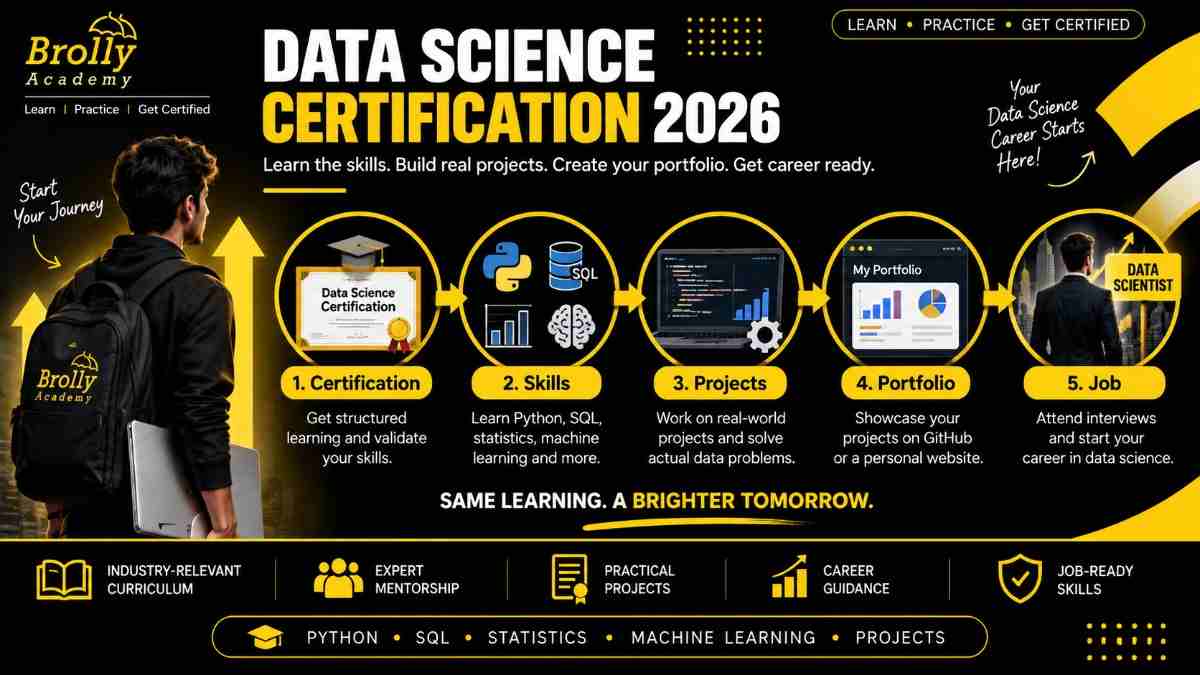
What Is a Data Science Certification?
A data science certification is a credential that shows you have learned or demonstrated skills related to data science.
Depending on the program, you may learn:
- Python
- SQL
- Statistics
- Data analysis
- Data visualization
- Machine learning
- Data cleaning
- Exploratory data analysis
- Model evaluation
- Feature engineering
- Artificial intelligence
- Cloud technologies
- Business problem-solving
However, there is an important difference between a certificate and a certification.
A course certificate usually means you completed a learning program.
A professional certification may require an exam, assessment, practical test, or other form of skill validation.
Certificate vs Certification
So, before enrolling, always check what the credential actually proves.
Is Data Science Certification Worth It in 2026?
Yes, but it depends on how you use it.
A certification can give you a structured learning path. It can also help you understand what to learn and give you something relevant to add to your resume.
But employers still want to know one important thing:
Can you actually solve data problems?
For example, imagine two candidates.
Candidate A has five certificates but cannot explain how to clean a dataset.
Candidate B has one respected certification and three strong projects showing Python, SQL, statistics, visualization, and machine learning.
Candidate B may have a stronger practical profile.
That is why you should not collect certificates just to make your resume longer.
A better formula is:
Certification + Skills + Projects + Resume + Interview Preparation
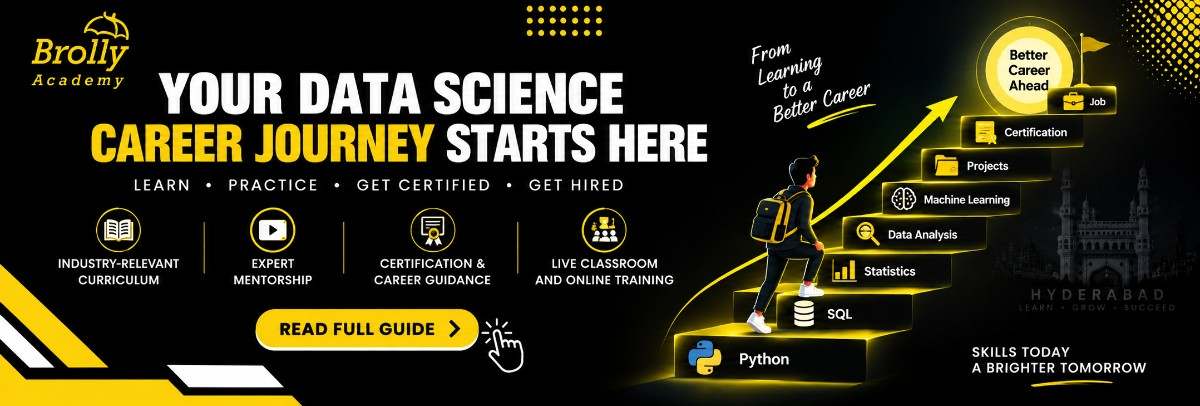
Who Should Get a Data Science Certification?
A certification can be useful for different types of learners
1. Freshers
If you are a college student or recent graduate, certification can give you a structured path into Data Science Course in Hyderabad
It can help you learn the basic tools and create projects for your portfolio.
But do not stop after receiving the certificate.
Build projects and practice interview questions.
2. Career Changers
Suppose you are working in testing, support, finance, marketing, sales, or another field.
A structured data science program can help you learn the technical skills needed to move into data-related roles.
If you want to learn data science using R, you can explore our Data Science with R Training in Hyderabad.
Your previous industry experience can also become an advantage.
For example, someone from finance can build finance-related data projects.
Someone from marketing can work on customer segmentation or campaign analysis.
3. Data Analysts
If you already work as a data analyst, you may not need a beginner-level program.
Instead, focus on skills such as:
- Statistics
- Machine learning
- Predictive modeling
- Python
- Advanced SQL
- Model evaluation
- Experimentation
This can help you move toward more advanced data roles.
4. Working Technology Professionals
Software developers and cloud professionals may benefit from specialized certifications in machine learning, cloud, MLOps, or AI.
The right choice depends on the role you want next.
What Should a Good Data Science Certification Teach?
Do not choose a certification only because it has a famous name.
Look at the curriculum.
A strong beginner-friendly program should cover the following areas.
Python
Python is one of the most commonly used programming languages in data science.
You should understand:
- Variables
- Data types
- Functions
- Loops
- Lists and dictionaries
- NumPy
- Pandas
- Data manipulation
- Basic visualization
You should be able to use Python to work with real datasets
SQL
SQL is another important skill.
Data scientists and analysts often need to retrieve information from databases.
You should know how to:
- SELECT data
- Filter records
- Join tables
- Group data
- Use aggregate functions
- Write subqueries
- Use CASE statements
- Work with dates
A certification that completely ignores SQL may leave an important skill gap.
Statistics
You do not need to become a mathematician.
But you should understand important concepts such as:
- Mean and median
- Probability
- Distributions
- Sampling
- Correlation
- Regression
- Hypothesis testing
- Confidence intervals
Statistics helps you understand whether your findings are meaningful.
Data Cleaning
Real-world data is rarely perfect.
You may find:
- Missing values
- Duplicate records
- Incorrect formats
- Outliers
- Inconsistent categories
- Invalid values
A good data science program should teach you how to find and fix these problems.
Machine Learning
You should learn the basic machine learning workflow.
Important topics include:
- Regression
- Classification
- Clustering
- Feature engineering
- Model training
- Model evaluation
- Cross-validation
- Overfitting
- Underfitting
- Hyperparameter tuning
The goal is not to memorize algorithms.
For practical guidance on preprocessing, model selection, supervised learning, and model evaluation, see the scikit-learn User Guide.
The goal is to understand when and why to use them.
Best Data Science Certification Options
Certification details verified from official provider sources (September 2026): IBM and Google program details were checked on their current Coursera program pages; AWS certification status and transition dates were checked on AWS Certification; DASCA eligibility and fee details were checked on the official DASCA certification page. Certification availability, pricing, exam versions, and eligibility can change, so readers should confirm the provider’s official page before enrolling or booking an exam.
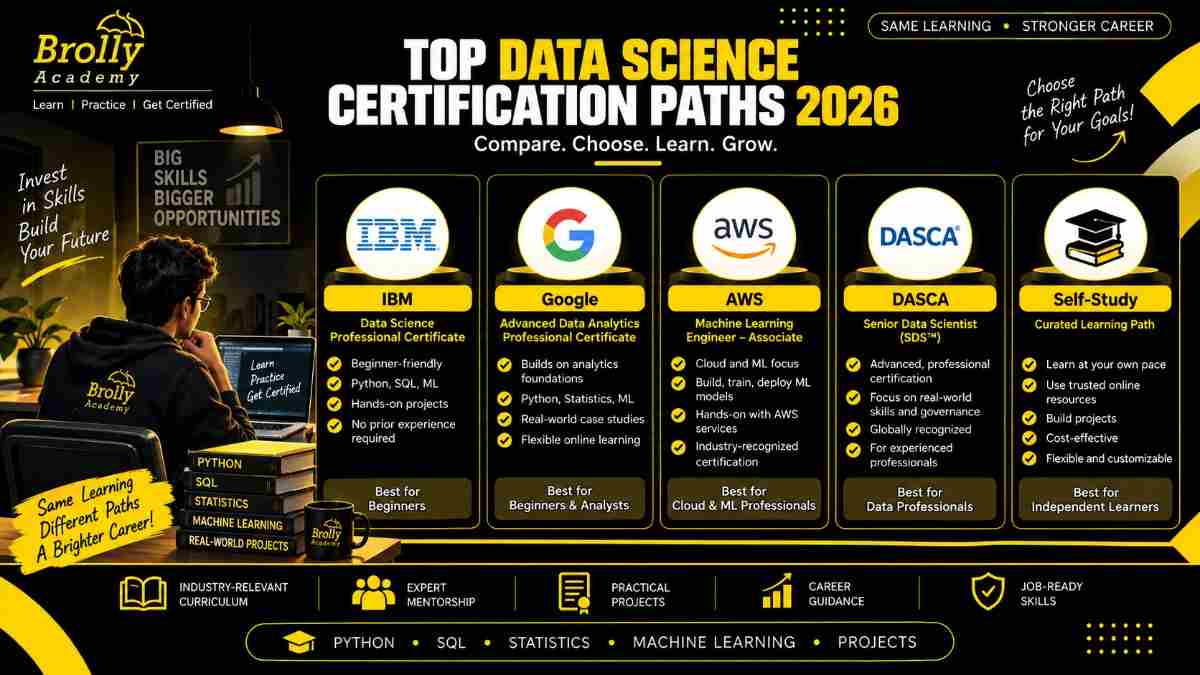
Do not choose a program simply because it appears first in a “best certification” list.
Read the curriculum and check whether it matches your target job.
How Much Does a Data Science Certification Cost?
The cost can vary widely.
Some learning programs are free or low-cost.
Others charge for subscriptions, exams, practical assessments, or professional credentials.
Your total cost may include:
- Course fees
- Certification exam fees
- Practice tests
- Learning materials
- Retake fees
- Cloud resources
- Project tools
Do not make your decision based only on price.
A cheap course that teaches very little may be less useful than a well-structured program with practical projects.
Before paying, ask:
What will I be able to do after completing this program?
That is a better question than simply asking:
How much does it cost?
How Long Does a Data Science Certification Take?
The time depends on your starting level.
Do not rush just to get the certificate.
Understanding the concepts is more valuable than completing a course quickly.
Can Freshers Get a Data Science Job With Certification?
This is one of the biggest questions beginners ask.
The honest answer is:
Certification can strengthen a fresher’s profile, but it does not guarantee a job.
A fresher should combine certification with practical projects.
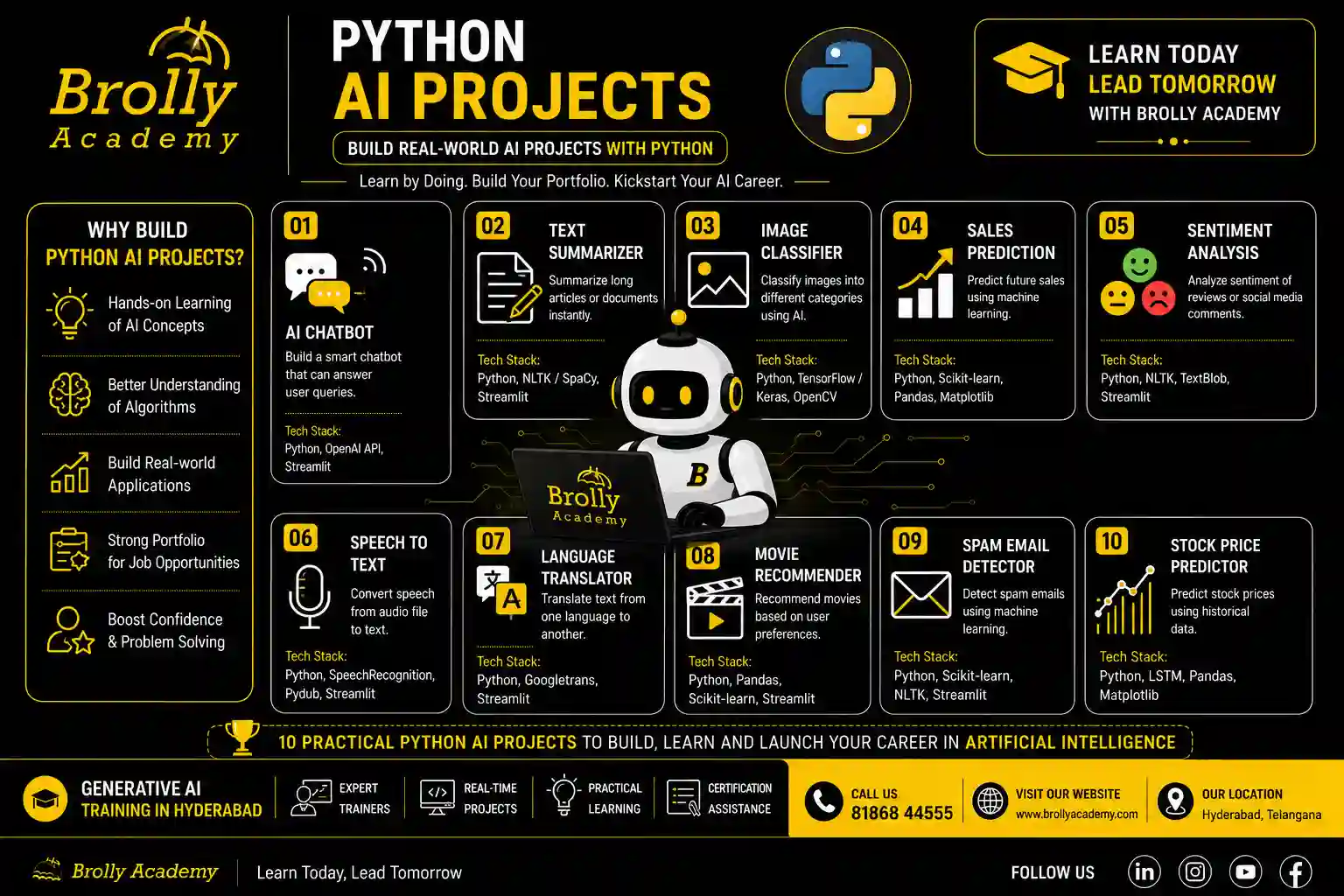
Try to build at least 2–4 meaningful projects.
For example:
- Customer churn prediction
- Sales forecasting
- Fraud detection
- Customer segmentation
- Sentiment analysis
- Recommendation system
- Demand forecasting
- Credit risk analysis
Your project should tell a complete story.
Start with a problem.
Then collect or use suitable data.
Clean the data.
Analyze it.
Build a model if appropriate.
Evaluate the results.
Finally, explain what the results mean for the business.
That is much stronger than simply uploading a notebook with a model and no explanation.
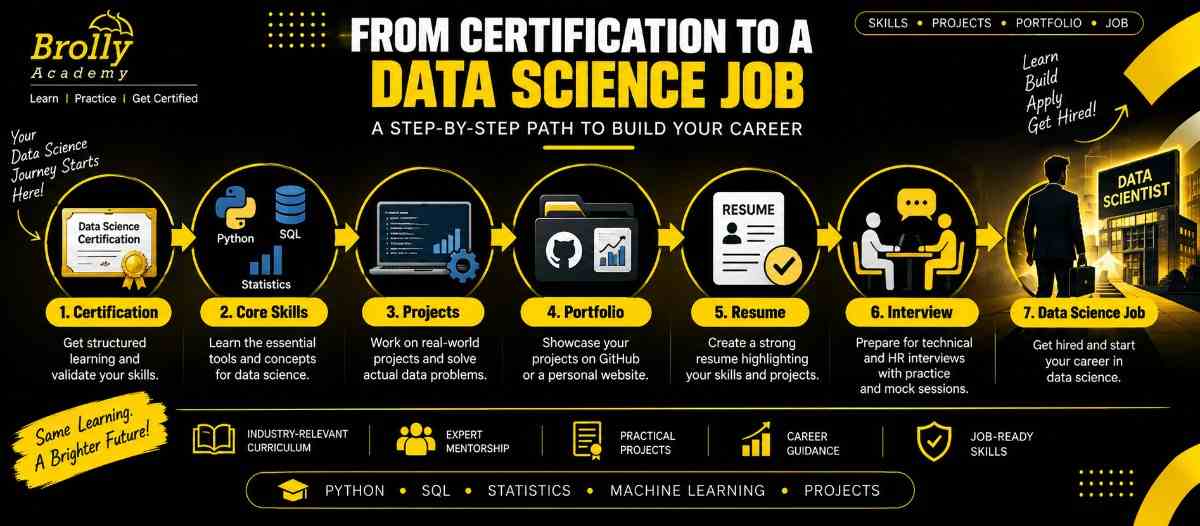
What Makes a Good Data Science Project?
A good project does not have to use a complicated algorithm.
Instead, show your complete process.
A strong project can include:
- Problem statement
- Dataset
- Data cleaning
- Exploratory data analysis
- Visualization
- Feature engineering
- Model selection
- Model training
- Model evaluation
- Business recommendations
For example, instead of saying:
“I built a machine learning model.”
Explain:
“I analyzed customer data to identify customers likely to leave and suggested actions the company could take to reduce churn.”
That shows both technical and business thinking.
Data Science Certification vs Portfolio: Which Is More Important?
Both have value, but they serve different purposes.
Think of certification as evidence that you completed structured learning or passed an assessment.
Think of a portfolio as evidence that you can apply your knowledge.
You want both.
A certification may help demonstrate your learning journey.
A portfolio helps demonstrate what you can actually build.
This is why you should avoid collecting many certificates without practical work.
One relevant certification plus strong projects can be more useful than several unrelated certificates.
Data Science Certification vs Bootcamp vs Master's Degree
Which path should you choose?
It depends on your goal.
If you are completely new, a structured program may make learning easier.
If you already have strong technical skills, a specialized certification may be enough.
Do You Need a Degree for Data Science Certification?
You do not necessarily need a data science degree to start learning data science.
Many beginner-friendly learning programs accept people without previous data science experience.
However, your target job may have its own education requirements.
Some data science positions prefer or require a bachelor’s or master’s degree, particularly for research-heavy roles.
So, do not confuse these two questions:
“Can I learn data science without a degree?”
and
“Can every data science job be obtained without a degree?”
They are not the same.
How to Choose the Right Data Science Certification
Before paying for a certification, ask yourself these questions:
Question 1: What job do I want?
Do you want to become:
- Data Scientist?
- Data Analyst?
- Machine Learning Engineer?
- Business Analyst?
- AI Engineer?
- Data Engineer?
Your answer should influence your certification choice.
Question 2: What is my current level?
Are you:
- A complete beginner?
- A student?
- A fresher?
- A data analyst?
- A software developer?
- An experienced data professional?
Do not choose an advanced certification when you still need to learn Python and SQL basics.
Question 3: Does the program include projects?
Projects are important.
Look for programs where you actually work with datasets instead of only watching videos.
Question 4: Is there an assessment?
Find out whether the credential is simply a course completion certificate or whether your skills are tested through an exam or practical assessment.
Question 5: Is the certification still active?
Technology changes quickly.
Before enrolling, check the official provider’s current certification status.
Older articles can continue recommending credentials that have changed, been renamed, or retired.
How to Put a Data Science Certification on Your Resume
Do not simply write:
“Data Science Certified.”
Give the recruiter useful information.
Include:
- Certification name
- Issuing organization
- Completion date
- Relevant skills
- Assessment type, if applicable
- Related projects
For example:
Data Science Professional Certificate — [Provider]
Python | SQL | Machine Learning | Data Analysis | Data Visualization
Then add a project that demonstrates those skills.
This makes the certification more meaningful.
Is a Free Data Science Certification Worth It?
A free certification can be useful.
But “free” should not be your main selection factor.
Ask:
What will I learn?
Is the provider credible?
Will I build practical projects?
Does the credential have value for my target role?
Can I demonstrate the skills after completing it?
If a free program teaches useful skills and gives you practical experience, it can be a good starting point.
But if you only watch videos and receive a digital badge, its career value may be limited.
Common Mistakes When Choosing a Data Science Certification
Avoid these mistakes.
Choosing Based Only on Brand Name
A famous brand does not automatically mean the program matches your career goal.
Collecting Too Many Certificates
Five certificates cannot replace practical ability.
Ignoring SQL
Many learners focus heavily on Python and forget SQL.
Do not make that mistake.
Avoiding Statistics
Machine learning without basic statistics can become difficult to understand.
Building Only Basic Projects
If your portfolio contains the same Titanic or Iris project as hundreds of other candidates, it may not show much originality.
Expecting a Job Guarantee
No certificate can replace skills, projects, interview preparation, and job-search effort.
A Simple Data Science Certification Roadmap
If you are starting from zero, follow this order:
Step 1: Learn Python basics
Step 2: Learn SQL
Step 3: Learn statistics
Step 4: Learn Pandas and data analysis
Step 5: Learn data visualization
Step 6: Learn machine learning fundamentals
Step 7: Complete a structured certification
Step 8: Build 2–4 portfolio projects
Step 9: Improve your resume and LinkedIn profile
Step 10: Practice technical and behavioral interviews
Step 11: Start applying for suitable jobs
This approach is much better than spending months collecting certificates.
FAQ’s
1. Is a data science certification worth it for freshers?
2. Which data science certification is best for beginners?
3. Can I get a data science job with certification alone?
4. How long does it take to complete a data science certification?
5. What skills should I learn before getting certified?
6. Can I become a data scientist without a master’s degree?
7. Is online data science certification useful?
8. Should I choose certification or a data science course?
9. What projects should I build after certification?
10. How should I list a data science certification on my resume?
Final Verdict: Is Data Science Certification Worth It?
A data science certification can be a valuable career investment, but it should not be treated as a magic ticket to a job.
The best certification is not necessarily the most expensive or the most famous one.
Choose a program that teaches skills you actually need.
Look for:
- Python
- SQL
- Statistics
- Data analysis
- Data visualization
- Machine learning
- Practical projects
- Assessments
- Real-world problem solving
Then go one step further.
Build projects.
Create a strong portfolio.
Improve your resume.
Practice interviews.
Learn how to explain your work clearly.
If you use certification as the starting point for building real skills, it can become a useful part of your data science career.
The goal should not be:
“I want another certificate.”
The goal should be:
“I want to become good enough at data science to solve real problems and prove that I can do the work.”