Practical cybersecurity learning | Hyderabad and online enquiries
Vulnerability Assessment Training in Hyderabad
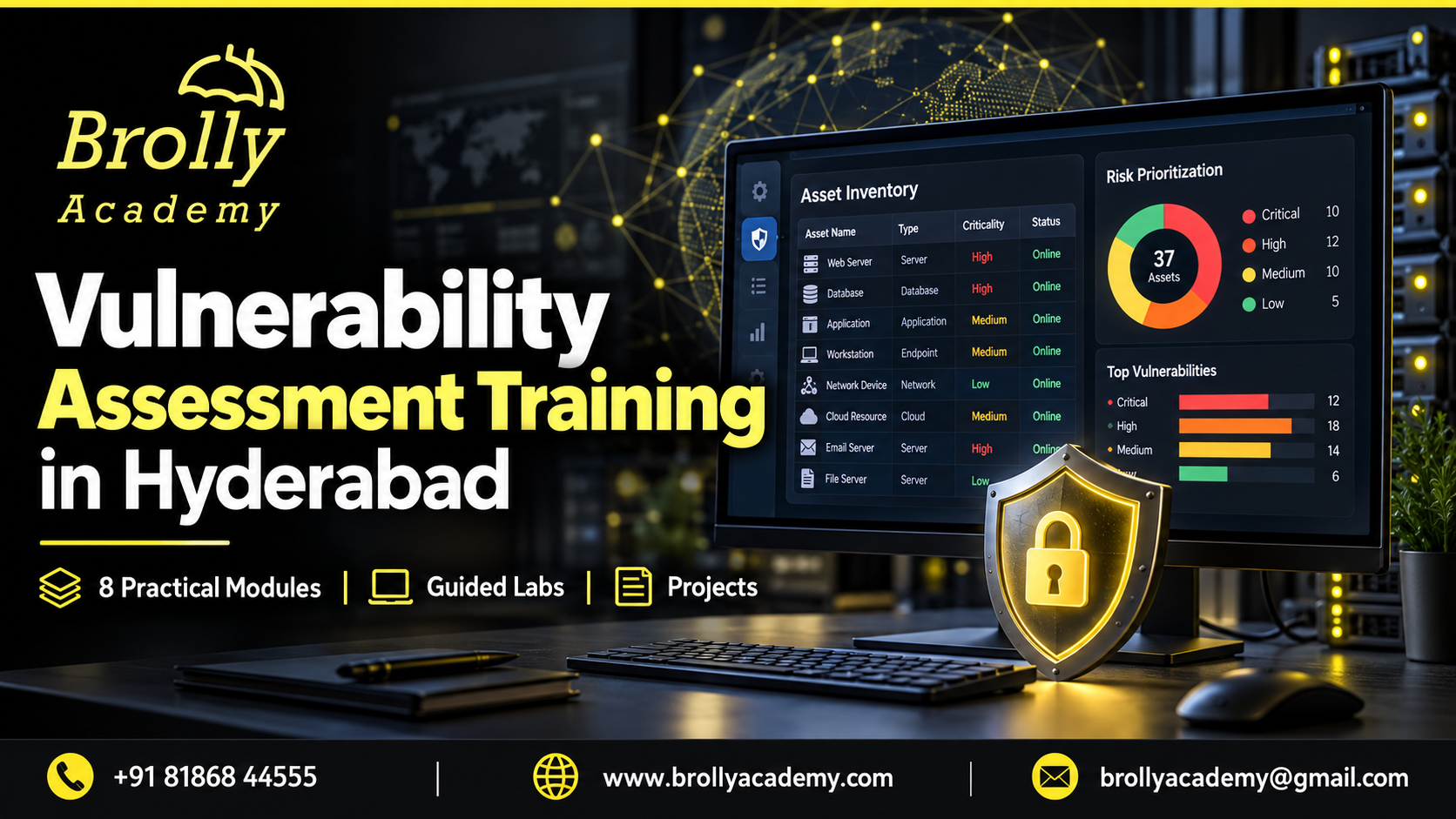
Learn to find, validate and prioritize security weaknesses with Vulnerability Assessment Training in Hyderabad. Follow eight practical modules covering asset scope, safe scanning, evidence review, risk-based remediation and closure checks. Build assessment reports that system owners can act on.
Course outline8 modules
Practice3 project scenarios
DurationAsk for batch schedule
Course feeRequest current fee
About Vulnerability Assessment Training
A vulnerability assessment is more than running a scanner and exporting a long report. An analyst needs to know what assets were covered, which results are reliable, what matters to the business and how a fix will be checked. This course teaches that full assessment-to-remediation workflow using controlled systems.
Assessment emphasizes coverage, validation and prioritization. Penetration testing adds a separately authorized attempt to demonstrate selected impact. Learners seeking the combined path can use the existing VAPT course; this page focuses on assessment operations and vulnerability management.
Use CISA Known Exploited Vulnerabilities catalogue alongside the relevant modules. The practice examples on this page are original teaching scenarios, not claims of vendor approval or live client work.
Who Should Join?
Basic networking, operating-system and patching knowledge are useful. System administrators, junior security analysts and IT support professionals can apply the workflow to a lab inventory.
Learners building a specialismBasic networking, operating-system and patching knowledge are useful. System administrators, junior security analysts and IT support professionals can apply the workflow to a lab inventory.
IT and security professionalsUse the module outputs to compare this course with the tasks in your current or target role.
Teams planning practical learningDiscuss a lab-led program using approved systems, synthetic records and clear learning goals.
For complementary learning, explore VAPT Training. Explore the existing course covering vulnerability assessment and penetration testing.
Vulnerability Assessment Syllabus: 8 Practical Modules
Each module connects a concept to an exercise and an output you can explain. Work through the foundations before attempting the integrated project.
1. Asset inventory and authorization
Define the owner, environment, business function and permitted checks for each lab asset. Record exclusions, test windows and points of contact. Produce an inventory that shows why an unscanned asset is not the same as a secure asset.
2. Vulnerability and configuration fundamentals
Distinguish a software vulnerability, insecure configuration, missing patch and unsupported component. Read vendor advisory language and CVE references. Document affected versions without assuming that a product name alone confirms exposure.
3. Assessment planning and scan safety
Choose approved assessment methods and a low-impact lab schedule. Discuss authenticated and unauthenticated coverage, access handling and operational limits. Define stop conditions and an owner contact before starting a permitted scan.
4. Scanner output and manual validation
Use sample results from an agreed scanner and compare them with system evidence. Identify duplicate alerts, version-detection limitations and failed checks. Record confirmed, unconfirmed and false-positive findings separately.
5. Risk-based prioritization
Combine severity with exposure, asset importance, compensating controls and evidence of exploitation. Learn why a score alone does not set the remediation order. Explain a priority decision in language that an asset owner understands.
6. Remediation and exception tracking
Turn findings into owner-assigned actions with agreed dates and evidence requirements. Distinguish a permanent fix from temporary mitigation. Document risk acceptance through the responsible owner instead of silently closing an unresolved issue.
7. Retest and coverage measurement
Repeat the relevant check after an approved change and record what changed. Track reopened findings and unavailable assets. Report coverage and ageing alongside counts so a smaller report is not mistaken for lower risk.
8. Assessment reporting and handover
Write an executive summary and a technical finding register. Include scope, evidence, limitations, priorities and next actions. Deliver a reusable assessment checklist and a closure report based on the lab results.
Discuss Your Learning Goals
Tell the team about your experience and preferred schedule. Book a free demo to discuss the course, lab access and the practical work expected from you.
Practical Skills You Will Develop
Use the exercises to build an explanation as well as a result. You should be able to show what you did, how you checked it and where the limits are.
Assessment planning and scan safetyChoose approved assessment methods and a low-impact lab schedule.
Scanner output and manual validationUse sample results from an agreed scanner and compare them with system evidence.
Risk-based prioritizationCombine severity with exposure, asset importance, compensating controls and evidence of exploitation.
Remediation and exception trackingTurn findings into owner-assigned actions with agreed dates and evidence requirements.
Tools and Lab Requirements
Practice only on systems you own or have explicit permission to use. The course outline uses isolated labs and synthetic data. Agree the software versions, access period, hardware requirements and any licence or cloud charges before enrolling. Never upload employer logs, credentials or personal evidence to a public tool.
Assessment scannerDiscuss the available Nessus, Greenbone or equivalent lab environment and its licensing before enrolment.
Vendor advisories and KEVUse authoritative affected-version information and CISA's exploited-vulnerability catalogue as inputs, not automatic proof of exposure.
Finding registerTrack owners, validation status, remediation decisions and retest evidence in a spreadsheet.
Keep NIST incident response guidance, SP 800-61 Revision 3 available when checking an exercise. Use the instructions for your installed version and authorized access level.
Your Learning Roadmap
Build confidence in stages. Practice time and your starting knowledge matter as much as the number of scheduled sessions.
1. Set up and understandCheck the prerequisites and lab access. Complete the first two modules and explain the basic workflow in your own words.
2. Build and investigateWork through the middle modules. Keep notes of errors, what you tried and the evidence that supported a fix.
3. Test and presentComplete the final modules and an integrated scenario. Present your output, validation and a short handover guide.
3 Practical Project Scenarios
These are teaching scenarios using approved lab systems and synthetic data. They are not claims about live client work or previous student results.
Small-estate assessmentReview a synthetic server inventory and create a scoped assessment plan with coverage gaps.
Prioritization workshopRank a mixed set of lab findings and explain how exposure and business value change the order.
Remediation closure packPrepare owner actions, mitigation notes and a retest record that distinguishes fixed, accepted and unresolved findings.
How the Skills Work in Practice
Two servers show similarly severe findings, but only one is internet-facing and supports a critical service. Your priority note should explain exposure and impact, not merely repeat a scanner score.
When a patch cannot be applied immediately, document an owner-approved mitigation and a follow-up plan. Marking the finding fixed without retest evidence would hide the remaining risk.
Why Learn with Brolly Academy?
Choose a course that connects the subject to work you can actually demonstrate. Use a demo to discuss the learning path and decide whether it fits your starting point.
A connected learning pathThe eight-module outline moves from foundations to an integrated task. Each module identifies an output rather than leaving practice as a vague promise.
A practical local conversationSpeak to the Hyderabad team about your goals, availability and lab needs. Ask questions before committing to a course or a particular schedule.
Clear course boundariesThe page explains prerequisites, product scope and the difference between training completion and independent certification. You can compare the offer with your actual requirements.
Compare Brolly Academy with Other Training Institutes
Use the same questions when comparing providers. This course outline gives you specific learning outputs to discuss; confirm each institute's actual delivery and terms before deciding.
What to discuss with Brolly AcademyReview these eight modules and the three project scenarios.
Ask for the assigned trainer profile.
Check the lab version and access period.
Review the fee, schedule and certificate terms.
Use the demo to assess the teaching approach.
What to check with any instituteRequest a detailed outline, not just product names.
Verify the trainer information supplied.
Separate demonstrations from your own lab work.
Check licences, exam costs and refund conditions.
Compare the total commitment, not only the advertised price.
Classroom, Online and Corporate Learning
Discuss the currently available delivery format with the academy before booking. Batch availability and session timings should be agreed in writing.
Hyderabad classroom enquiryAsk about the next classroom batch, venue, system requirements and whether you should bring a laptop.
Live online enquiryCheck the session time zone, remote lab access and arrangements for asking questions or catching up on a missed session.
Corporate team enquiryShare your team size, current tools and learning objectives. Agree a scoped program without sharing confidential business data.
For a team program, explore Brolly Academy corporate training.
Vulnerability Assessment Course Fee and Duration
Contact Brolly Academy for the current fee and timetable for Vulnerability Assessment Training. Review the complete learning commitment and inclusions before you enrol.
Request the current course feeAsk for a written quotation showing the total payable, taxes and payment terms. Confirm whether lab licences, cloud usage or external examination fees are separate.
Confirm the batch timetableDiscuss the instructor-led hours, expected practice time, session dates and access period. The eight-module outline describes the learning sequence, not a fixed completion promise.
Before you enrolCheck lab access, materials, project feedback, missed-session arrangements, refund terms and any additional charges. Keep a copy of the agreed offer.
Course Completion and Certification Guidance
Brolly Academy course completion recognizes the training and assessment work agreed for your batch. It is separate from a credential awarded by a software vendor or another certification body.
Brolly Academy course completionAsk for the attendance, assignment and assessment requirements, the certificate wording and how completion will be verified.
Independent certificationUse official vendor information to check whether a relevant credential is currently offered and what preparation it requires. No vendor authorization, exam voucher or pass guarantee is implied.
Career Roles and Skill Applications
Match the learning path to a role, then compare its requirements with your existing experience. The course can support skill development; it does not guarantee employment.
Vulnerability management analystMaintain validated findings and remediation progress.
Security assessment analystReview scope, coverage and evidence.
Infrastructure security administratorConnect patch and configuration changes with risk reduction.
You can also explore SOC Analyst Course. Connect technical findings with monitoring, escalation and analyst workflows.
Where These Skills Are Used
These skills support vulnerability management analyst, security assessment analyst, infrastructure security administrator. Employers combine technical knowledge with careful documentation, communication and responsible access. Your lab portfolio should show decisions, evidence and limitations, not claim that a training exercise was a live client engagement.
Interview and Portfolio Preparation
Prepare evidence you can discuss clearly. Label practice work as training work and do not present a teaching scenario as paid client experience.
Explain a projectDescribe the requirement, your decisions, the result and one limitation. Be ready to answer what you would change for a real deployment.
Show useful evidenceKeep approved files, test results and a concise README or runbook. Remove secrets and private information before sharing a portfolio.
Discuss support servicesAsk the academy which resume, mock-interview or job-search services are included in your batch. Placement assistance is not a job or salary guarantee.
Career Planning and Salary Expectations
Salary depends on the role, prior experience, location and the employer. A tool course alone does not establish a salary band. Compare recent job descriptions, required experience and responsibilities rather than relying on a headline income promise.
Meet the Trainer Through a Demo
Discuss the assigned trainer's relevant experience during a free demo. Ask how they would explain a practical vulnerability assessment problem and review your lab evidence.
Relevant experienceAsk for examples of work with Vulnerability Assessment that can be discussed without revealing confidential client information.
Practical explanationAsk the trainer to explain a failure scenario and how a learner would investigate it, rather than only showing a finished result.
Feedback and supportDiscuss how assignments are reviewed, how questions are handled and the support period included in the course.
Brolly Academy Learner Reviews
Read available academy feedback and ask whether a review relates to this particular course, trainer and delivery format. General academy reviews should not be mistaken for verified results from this new course.
Read Academy ReviewsDownload Your Practice Checklists
Use these editable CSV files to organize your learning. They open in common spreadsheet tools and contain real module and project-checklist content.
Download Syllabus Checklist (CSV) Download Project Review Sheet (CSV)Official Documentation for Further Reading
Use the documentation that matches your product version and environment. These sources support technical learning; linking to them does not imply endorsement of Brolly Academy.
CISA Known Exploited Vulnerabilities catalogue
NIST incident response guidance, SP 800-61 Revision 3
OWASP Web Security Testing Guide
Related Courses at Brolly Academy
Choose complementary learning based on your current skill gaps. These are separate courses, not automatically included in this program.
VAPT TrainingExplore the existing course covering vulnerability assessment and penetration testing.
View VAPT Training
Cyber Security CourseBuild a broader foundation in security concepts and the responsibilities of a security team.
View Cyber Security Course
SOC Analyst CourseConnect technical findings with monitoring, escalation and analyst workflows.
View SOC Analyst Course
For a complementary learning path, also explore Web Application Security training and Network Security training. These are separate programs; choose the one that fits your role and prerequisites.
Vulnerability Assessment Training Enquiries in Hyderabad
Speak to Brolly Academy near JNTU Metro Station. The centre address is Metro Pillar No. A689, Dr Atmaram Estates, 3rd Floor, Nizampet X Roads, Hyderabad 500072. Confirm the batch venue before travelling.
Learners from Kukatpally, KPHB, Nizampet, Miyapur and other parts of Hyderabad can contact the academy to discuss classroom or online availability.
Call +91 81868 44555Vulnerability Assessment Training FAQs
Is vulnerability assessment the same as penetration testing?
No. Assessment identifies and prioritizes weaknesses; penetration testing is a separate scoped activity used to validate selected impact. The existing VAPT course covers the combined learning path.
Which scanner will I use?
Ask the team to confirm the batch environment and licence. The course teaches validation and reporting principles that apply beyond one vendor.
Does a high score always mean fix first?
No. Exposure, asset criticality, exploitation evidence and available controls also matter. Explain the decision rather than relying on a number alone.
Are authenticated scans always better?
They can improve visibility when properly configured, but coverage, permissions and scan reliability still need to be checked. Authentication does not guarantee complete assessment.
What is the main project output?
A scoped finding register with evidence, risk reasoning, owner actions and retest status. It should be useful to the person responsible for remediation.
Can I scan my employer's systems for practice?
Only with explicit permission, an agreed scope and approved operating conditions. Use isolated training systems for the course exercises.
What are the course fee and duration?
Contact Brolly Academy for the current batch quotation and timetable. Confirm instructor-led hours, practice time, lab access, taxes and any separate licence or exam charges in writing.
What certificate will I receive?
Ask for the Brolly Academy completion requirements and certificate wording for your batch. Course completion is separate from an independent vendor examination; no external credential or exam voucher is implied.
Request a Free Demo
Share your contact details and the team can discuss course availability, prerequisites and the next suitable session.
Your details are used to respond to this enquiry. Read our Privacy Policy.